about
kAMBO
The origins of kambo
Kambo originates from the rainforests of the Upper Amazon, where it has been used for generations by different indigenous communities as part of ancestral healing and jungle traditions. Among the peoples most closely connected with the practice are the Matsés, Katukina, Huni Kuin (Kaxinawá), Yawanawá, Marubo, Kulina, and other tribes living throughout regions of Brazil and Peru.
As with many ancestral medicines, the origins of Kambo are carried through oral tradition. Each tribe holds its own stories, practices, and relationship with the medicine, shaped by its connection with the jungle and the way knowledge has been passed through generations.
One of the most widely shared stories comes from the Huni Kuin people of Brazil. According to the legend, a Pajé — a tribal healer — received the knowledge of the frog medicine during a profound spiritual encounter after illness had spread through his village. Through the use of the secretion, balance and health were restored, and the medicine became known as Kampum or Kambo.
Traditionally, Kambo was often used before long hunting journeys to strengthen the body, sharpen focus, increase stamina, and clear what some tribes refer to as “Panema” — a heavy or blocked energetic state associated with bad luck, fatigue, or disconnection. It was also worked with in relation to cleansing, resilience, fever, infections, and overall wellbeing within life in the rainforest.
In many indigenous cultures, Kambo was not approached as a performance or ritual spectacle, but as a practical medicine integrated into daily tribal life. Different communities developed their own ways of applying and working with the secretion, including traditions passed through female lineages that have often remained less visible outside the Amazon.
The first written observations of Kambo by non-indigenous people date back to the early twentieth century. From the 1980s onward, anthropologists and researchers began documenting its use more extensively among Amazonian tribes, and during the 1990s the practice gradually spread beyond the rainforest into larger Brazilian cities before eventually reaching the rest of the world.
what is kambo?
Kambo is the secretion of the Phyllomedusa Bicolor, also known as the Giant Monkey Tree Frog — a large bright-green tree frog native to the Amazon rainforest and found throughout regions of Brazil, Peru, Colombia, Venezuela, Suriname, and the Guianas.
The frog can grow up to 10–12 cm in length and lives high in the rainforest canopy, often more than twenty meters above the ground. It is a nocturnal and arboreal species, recognized for its calm nature, slow movements, and distinctive waxy skin.
As part of its natural defense system, the frog produces a white secretion through glands located on its skin. This secretion protects the animal from predators, bacteria, fungi, and microorganisms present within the humid environment of the jungle. Due to the potency of this natural defense, the frog has very few natural predators in the wild.
The secretion contains a highly complex composition of bioactive peptides, proteins, and alkaloids that interact intensely with the human body. Over the last decades, these compounds have attracted growing scientific interest for their relationship with the nervous, immune, vascular, digestive, and endocrine systems.
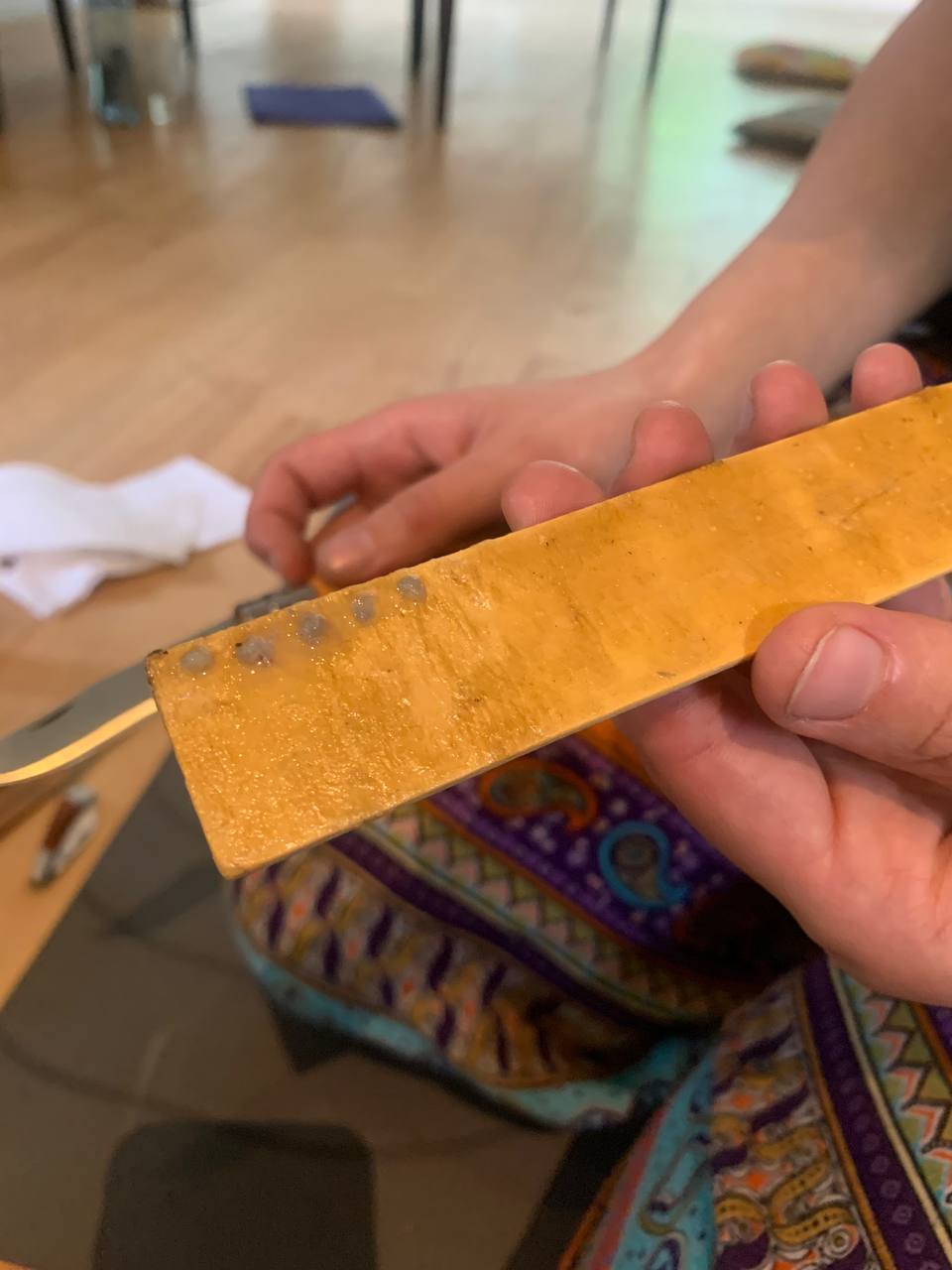
Traditionally, the secretion is collected with care and respect for the animal. During proper harvesting practices, the frog is not harmed and is carefully returned to its natural habitat after the secretion has been collected.
During the application, the secretion is placed onto small superficial points on the skin, allowing it to enter the lymphatic system and move rapidly through the body. The process is known for creating a strong physical response while working deeply through multiple systems at once.
Kambo is often referred to as the “Vaccine of the Forest” due to its long traditional relationship with cleansing, resilience, stamina, vitality, and immune support among indigenous Amazonian communities.
Despite the intensity of the experience, Kambo is not considered a psychedelic or hallucinogenic substance. It does not produce visual hallucinations or altered visual perception in the way psychedelic medicines are commonly understood. Most people remain fully conscious, aware, and mentally present throughout the process.
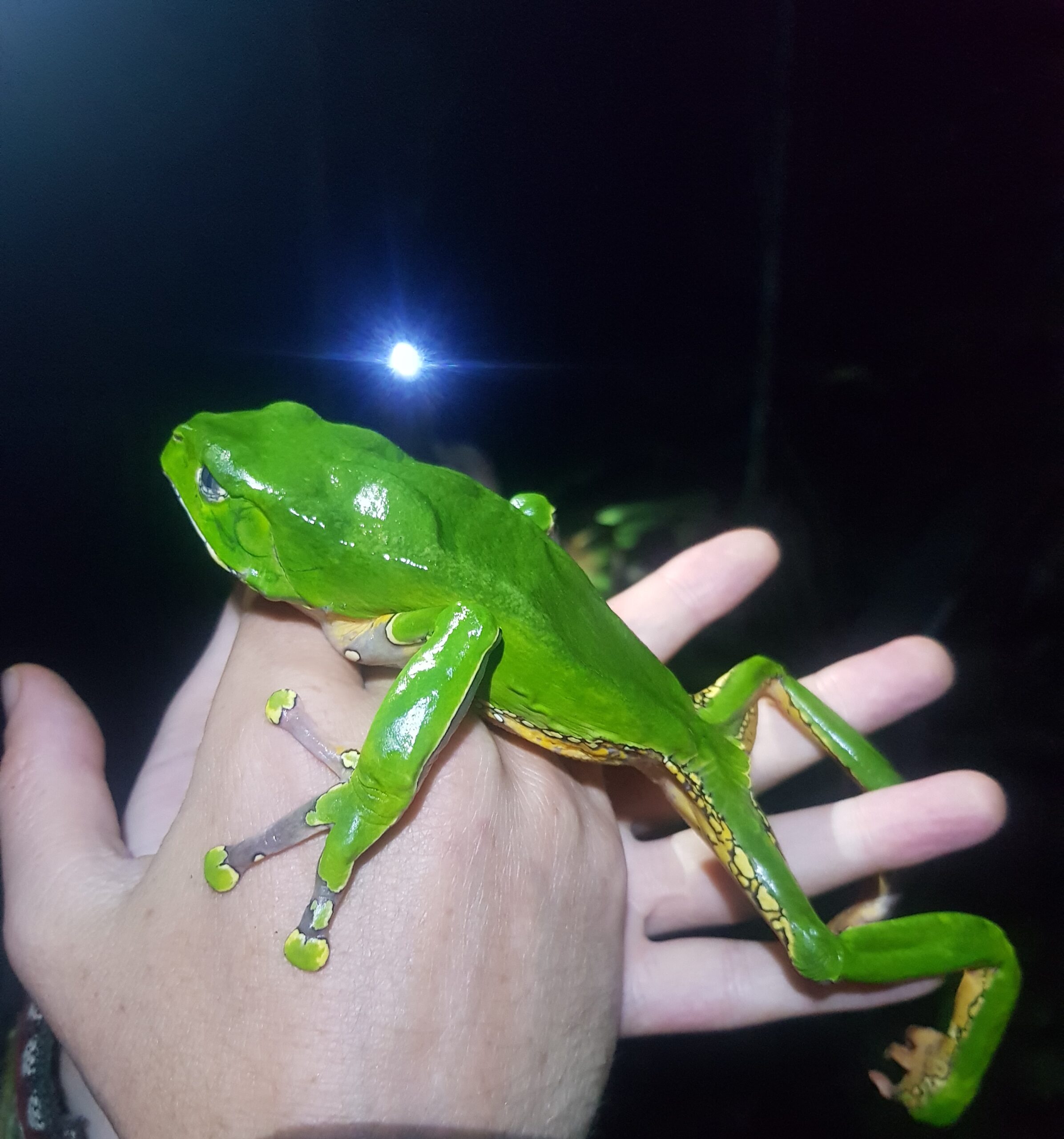
When collected responsibly, the secretion can be gathered without harming the frog.
Ethical harvesting practices focus on protecting both the animal and the delicate ecosystems of the Amazon rainforest where these species live.
Kambo: Potential Areas of Support
Body
Activates a powerful cleansing process within the body. Supports the lymphatic, digestive, immune, endocrine, and nervous systems while encouraging release, renewal, and physical reset.
Mind
Breaks through emotional stagnation, mental noise, and accumulated tension. Encourages clarity, emotional resilience, focus, and a deeper sense of inner steadiness.
Spirit
Opens space for deeper awareness, grounding, and transformation. Helps reconnect with intuition, inner truth, and the parts of ourselves often buried beneath fear, distraction, and conditioning.
- Significantly strengthens the immune system
- Physical cleansing and release
- Fatigue, low energy, and physical heaviness
- Mental clarity and focus
- Emotional stagnation and accumulated stress
- Increases fertility
- Nervous system regulation and resilience
- Autoimmune disease
- Circulation and lymphatic activation
- Support during periods of personal transition and transformation
- Diabetes
- Chronic tension and inflammatory discomfort
- Prevents and treats infections and fungi such as candida
- Digestive and gastrointestinal imbalance
- Regulates blood pressure
- Reduces chronic pain
- Emotional processing and inner grounding
- Greater presence, awareness, and connection with oneself
- Cleanses the Aura and Karmic Energy
- Addictive patterns and compulsive behaviors
- Removes heavy metals
- Feelings of disconnection, lethargy, or “Panema”
- Emotional resilience and inner steadiness
The science of kambo
Kambo creates one of the most intense physiological responses found within traditional Amazonian medicines.
Unlike psychedelic substances, its effects are not based on hallucinations or altered perception, but on a rapid interaction between the secretion’s bioactive compounds and multiple systems of the human body.
Within minutes of the application, the body enters a strong physical response that can include heat, sweating, nausea, vomiting, swelling, purging, emotional release, and activation of the nervous system. Although physically demanding, this process is traditionally understood as part of the cleansing and releasing effect associated with the medicine.
The secretion of the Phyllomedusa bicolor contains dozens of identified bioactive peptides alongside proteins, alkaloids, and other naturally occurring compounds. Many of these peptides have attracted scientific interest because of the way they interact with pain receptors, circulation, digestion, stress response, immune function, and communication between the brain and body.
While modern research on Kambo in humans is still limited, the complexity of its peptides continues to generate growing interest within fields connected to neurobiology, pharmacology, and peptide science.
Kambo is not about adding something to the body. It is about removing what stands in the way of its natural intelligence. Rather than forcing change from the outside, it is traditionally understood as supporting the body’s own capacity for regulation, adaptation, and restoration.
bioactive peptides
Peptides are short chains of amino acids that function as signaling molecules within the body and play an essential role in human physiology.
Different compounds identified within Kambo have been studied for their interaction with pain perception, blood vessels, digestion, stress response, antimicrobial defense, and immune activity.
Several of these molecules belong to peptide families naturally used by amphibians as protective defense mechanisms against predators, bacteria, fungi, and environmental threats.
Peptides Library
Found in kambo, are opioid-like peptides. Dermorphins bind strongly to Mu opioid receptors, while Deltorphins bind to delta opioid receptors. These peptides exhibit potent analgesic properties, up to 1000 times more potent than native endorphins and 30-40 times more potent than morphine.
Despite their potency, neither dermorphin nor deltorphins show signs of dependence or abuse potential, possibly due to their high potency, requiring lower doses. In a human study, dermorphin proved superior to morphine for post-operative pain relief. Dermorphin has also been illegally used in horse racing to alleviate pain in injured horses.
Deltorphin demonstrates gastroprotective effects through interaction with the vagal nerve, suggesting potential neuroregulatory properties.
Among the peptides found in kambo, stand out for their remarkable antibiotic properties. They exhibit effectiveness against a wide range of pathogens, including bacteria, viruses, fungi, and protozoa. Studies have shown dermaseptins’ ability to combat various pathogens such as E. coli, salmonella, herpes viruses, HIV, candida albicans, and malaria-causing protozoans. What’s particularly promising is their ability to selectively target and destroy pathogens without harming animal cells, making them potential candidates for medication development.
Moreover, dermaseptins demonstrate significant efficacy in killing cancer cells and inhibiting their proliferation. Certain dermaseptins, like adrenoregulin, also impact adenosine agonist activity and may enhance the permeability of the blood-brain barrier, indicating potential applications in drug delivery research.
Also known as dermaseptin B2, is a peptide consisting of 33 amino acids. It interacts with the adenosine receptor, a crucial component involved in cellular energy metabolism present in all human cells. Studies have demonstrated its remarkable efficacy in killing cancer cells, highlighting its potential as a promising agent in cancer therapy.
A peptide found in kambo, interacts with the tachykinin system in mammals. This system plays a crucial role in regulating neurotransmitter release, including serotonin and dopamine. Phyllomedusin’s effects extend to inducing rapid contraction of intestinal muscles and acting as a potent vasodilator. This vasodilation may enhance vascular permeability across the blood-brain barrier, potentially impacting various physiological processes.
Present in kambo, engages with the bradykinin system, leading to the relaxation of smooth muscle tissue. Additionally, it acts as a vasodilator and potentially affects the permeability of the blood-brain barrier. Notably, this peptide induces a swift reduction in blood pressure, highlighting its physiological impact.
Found in kambo, triggers activity in the adrenal cortex and pituitary gland. It also prompts contractions of the gall bladder and secretion of gastric and pancreatic juices. Together with phyllokinnin, it contributes to the hypotensive effects of kambo, potentially leading to temporary fainting in some individuals due to a drop in blood pressure.
Neuropeptides are active compounds found in kambo, with significant effects on both the central and peripheral nervous systems. These peptides play a role in stimulating gastric acid secretion and promoting smooth muscle contraction. Their activity spans across various physiological processes, contributing to the intricate regulation of digestive functions and muscle activity.